
Walking Between Worlds: Episode VI
A summary from the podcast Walking Between Worlds. Listen now from your favorite podcast app.
The Globalized World
Guest: Lauren Wells, Training Director at CultureBound and owner of TCK Training.
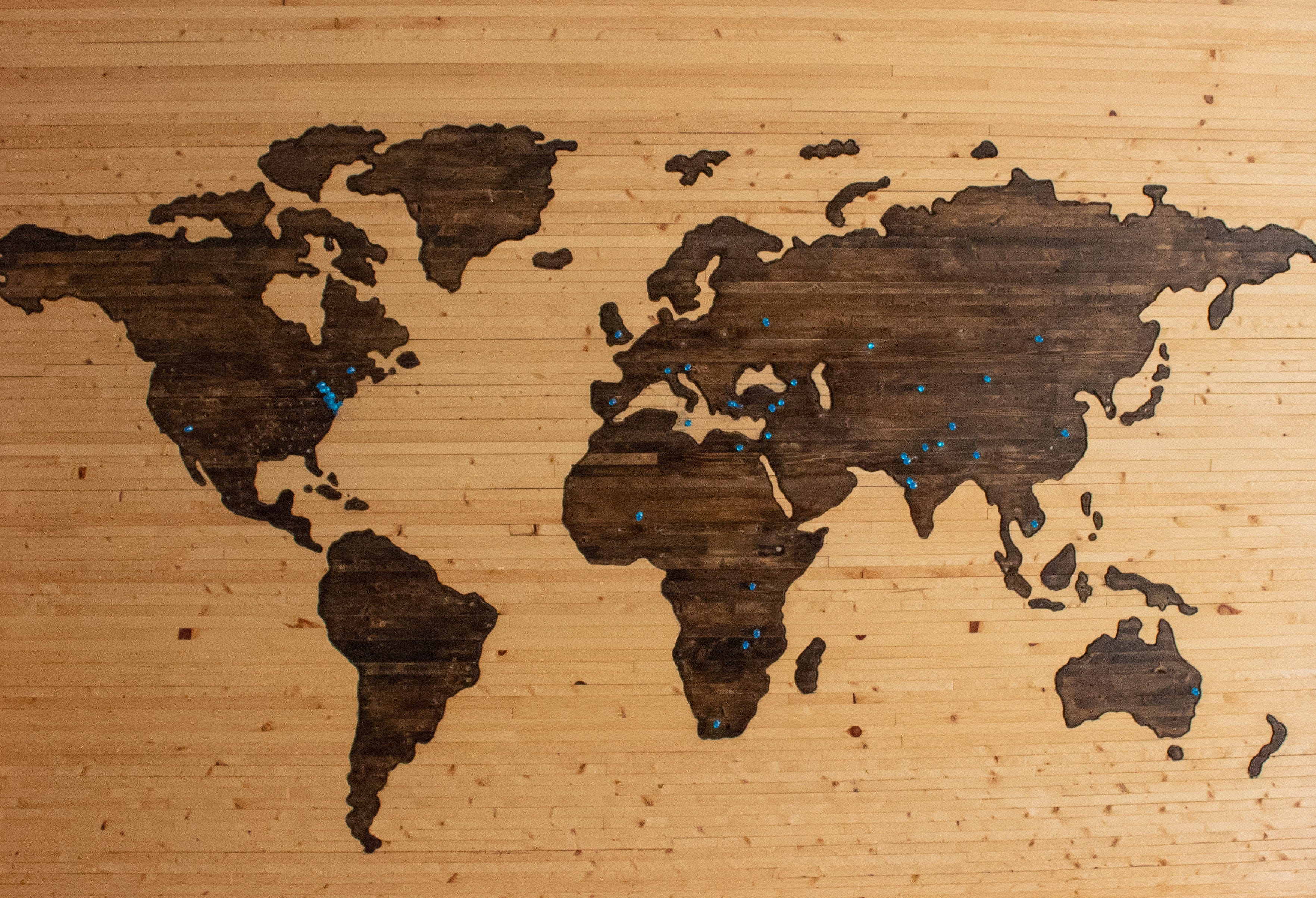
One of the discussions that are heard in culture study is a globalized world. While there are political implications to this word, at Walking Between Worlds, we are focusing on everyday life. The world is not entirely globalized yet, but it is globalizing. A globalizing world means that more and more people are living outside their passport country. They are not living their daily life in their country of origin. Many people are moving from one place to another. Cultures and people are getting more intermixed. Globalization is taking place all over the world, no matter which country it is.
The usual reaction to this form of globalization is discomfort. When examining the heavy influx of people who are from other places moving to another culture, especially immigrants from vastly different locations, most human cultures universally react with hesitation and fear. The reason for the discomfort is cultural balance, which is the need to maintain equilibrium in daily life no matter the culture. As children, humans are trained, mostly by parents or authority figures, to act in a socially acceptable manner. Don't yell in the grocery store, don't run in the library, or be respectful of teachers. This learning process, socialization or enculturation, is how children learn to maintain cultural balance by keeping social rules.
When social norms are broken, cultural balance is disturbed, society generally rejects such behavior and censures those who upset the pattern of how it feels life should work.
Cultural balance is reinforced by laws, government, and law enforcement. These norms of behavior become expected, accepted, and comfortable. These patterns become so ingrained in a culture that they become unconsciously intuitive. If the patterns are disturbed, an individual or group can become excommunicated from society or get a funny look. For example, making excessive noise can get someone kicked out of a library or doctor's office. Society strives to develop productive members of society who are successful and have good relationships.
The introduction of people from one place into another place can upset the cultural balance. They may do things differently than their neighbors, who subconsciously get upsets because "That isn't the way you're supposed to do that." That is when people get uncomfortable and start to polarize. Offended or disturbed people withdraw to their group who share their values to maintain cultural balance. A possible example of upset cultural balance is increased immigration laws. Other examples of social sanctioning sometimes include segregation or even racism. These institutional and non-institutional patterns can be used to keep out those who are different and keep like-minded people together. Usually, this is subconscious. It is a natural response to the uncomfortableness of people around you who do things differently than you would do them.
In a globalizing world, cultural imbalance appears when people from one culture move into another culture and upset the expected behaviors. While cultural imbalance feels uncomfortable, it is not inherently wrong. The goal of globalization cannot be to make everyone the same or to eliminate cultural imbalance. The idea of making life comfortable for everyone is unrealistic. The diversity of cultures makes homogenization impossible and impractical by consciously agreeing that some degree of cultural imbalance is the norm of a globalizing world. People can begin to unconsciously accept discomfort from cultural imbalance as a natural part of modern life. This can be accomplished in part by becoming aware of cultural patterns within one's own culture, which allows people to engage in relationships with people who do not share cultural norms.
There will be those within most societies that will reject globalization and its effects as well as refuse to learn to adapt to different cultural patterns. Due to the current trends of cultures mixing, at some point, monoethnic people will either need to adapt or isolate. It must be their choice. Flexibility is not always easy for everyone, especially those who have lived long lives in monoethnic cultures. Adaption can take a long time, especially when the trends of history seem to be moving so quickly.
Globalization can happen on an international level down to a family level. National differences, regional distinctives, even small communities with diverse members can find interaction to be uncomfortable based on cultural differences. Marriages between people of similar cultures can struggle with cultural balance when intuitive patterns of family life don't coincide well. Often cultural differences between friends or spouses can be perceived as a shortcoming, a character flaw, or poor judgment. Being conscious of cultural patterns can alleviate some of these tensions by recognizing distinctives are not necessarily wrong, just different.
The goal of bridging cultural differences starts with a consciousness of one's cultural patterns.
Recognizing personal culture patterns can allow for a comparison of cultural patterns that are not our own. Comparing and contrasting different patterns allows each person or group to recognize where the major cultural differences are — then realizing that people do not experience the same patterns of expected behavior and culture patterns. This should lead to an understanding that culture patterns that are not similar to yours are different, not bad.
It is valuable to see different ways to do life. It can open up perspectives and opens up the way you see the world. This can lead to personal growth. Additionally, in an increasingly globalized world, the need for cultural adaptability and people with that ability to walk between different worldviews will be more necessary. Any place or industry touched by globalization will need culturally adaptable people — teachers and mentors who will be able to help others bridge the gap between cultures.
In a globalized and globalizing world, our neighbors end up being anyone in which you have an opportunity to connect.
As you go on your way through life, you interact with multiple people daily. In that sense, you choose those who will be your neighbors, those who you have the opportunity to interact with. Because the natural human tendency is to gravitate towards those who are similar to you, being aware of cultural differences makes interaction with those who are dissimilar difficult. It takes a deliberate, conscious effort to engage with people who are different, as it can be uncomfortable.
For example, if you notice someone is struggling at the grocery store, but you don't share the same language (language is a barrier but not THE barrier), it is possible to build a relationship even without a shared verbal language. If they are struggling and you are seeking to help them, they will probably understand your intent through body language, tone of voice, and facial expression. One of the things that CultureBound teaches is that communication is more than just a verbal language. Communication between different language groups is possible. Fear can often be a significant barrier, but most people in the world understand the difficulty of overcoming language differences. Attempting to work through language differences are often appreciated and often rewarding. Most humans appreciate the effort of others to reach out and are gracious with attempts to deal with language. People forgive if an effort is put forth.
Taking time to find out not only how other cultures do life, but why they do certain things, demonstrates a genuine commitment to getting to know people and build real relationships. Most of the time, people are gracious. There might be less grace when the steps of getting to know someone and their culture is just a mechanical process to figure out a puzzle. As said in episode IV, this is a tendency with many Americans. A utilitarian approach to other humans should be avoided.
If the goal is to figure out culture or a person, then the possibility of the development of a healthy relationship diminishes greatly. However, if the goal is just to get to know someone else, relationships become far more possible.
A question for our readers.
Who is it that you have an opportunity to be neighbors with that you might be avoiding, or you might be uncomfortable with because it would throw off your cultural balance?
Who are you subconsciously avoiding reaching out to?
What is Walking Between Worlds?
Walking Between Worlds is a podcast hosted by CultureBound. CultureBound is a training organization that specializes in Culture and Language. This podcast focuses on the secrets of culture to enrich our interactions with others. The topics covered relate to culture and building connections with people across cultural differences, specifically as it relates to American culture in a world that is globalizing. Walking Between Worlds is about how to navigate relationships in a cross-cultural context. This is a sneak peek into the material that CultureBound covers. We also have premium content and training on our website CultureBound.org that you can take today!
Originally published at https://medium.com/culturebound/walking-between-worlds-episode-vi-ca84db7b0c61.